Custom software or off the shelf: when bespoke is worth paying for
Most businesses should start with a SaaS tool. Here is how to spot the point where custom or bespoke software starts saving more than it costs.
NectArray team · 21 September 2026 · 4 min read
We build custom software for a living, and we still tell most small businesses to start with an off-the-shelf tool. A ₹2,000-a-month subscription that covers 80 percent of what you need is a better deal than a ₹5 lakh build that covers 100 percent, for a while. The useful question is when that stops being true.
This article gives a simple way to tell.
What each option really costs
Off-the-shelf software, whether SaaS like Zoho, Shopify, Tally or a CRM, costs little to start. You pay per user or per month, someone else fixes the bugs, and you can be running in a day. The costs arrive later, as you add users and paid add-ons, and as your team spends time working around what the tool cannot do.
Custom software, also called bespoke software, costs more up front and then much less per user. You own it, it fits your process exactly, and it can connect to anything. You also pay for hosting and maintenance, and every new feature is a small project.
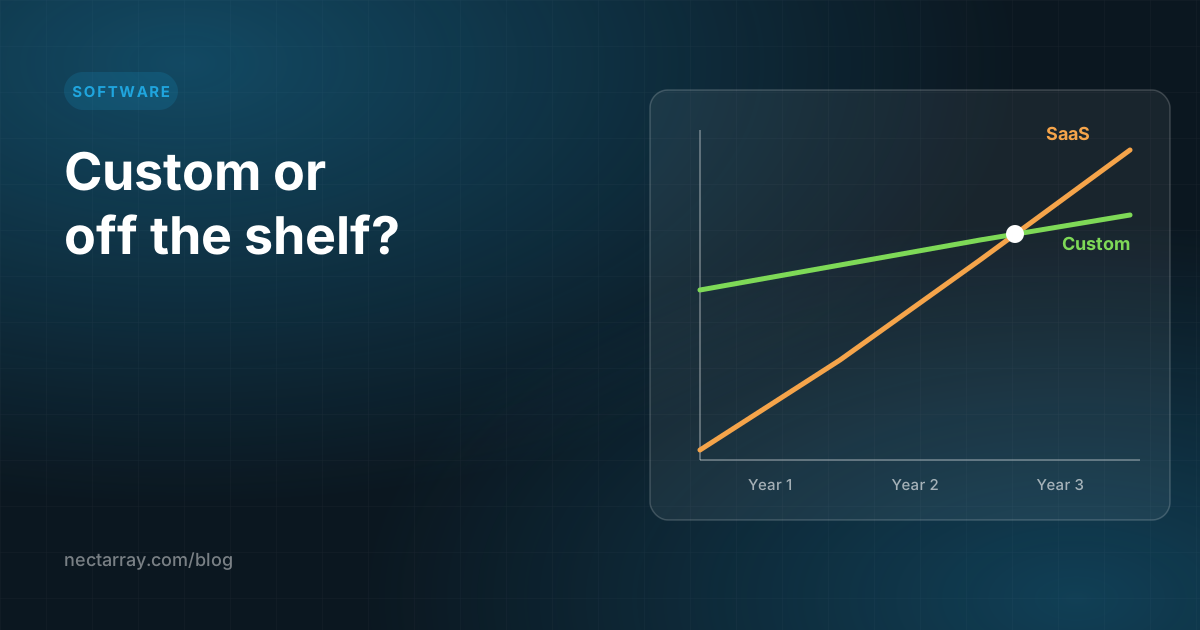
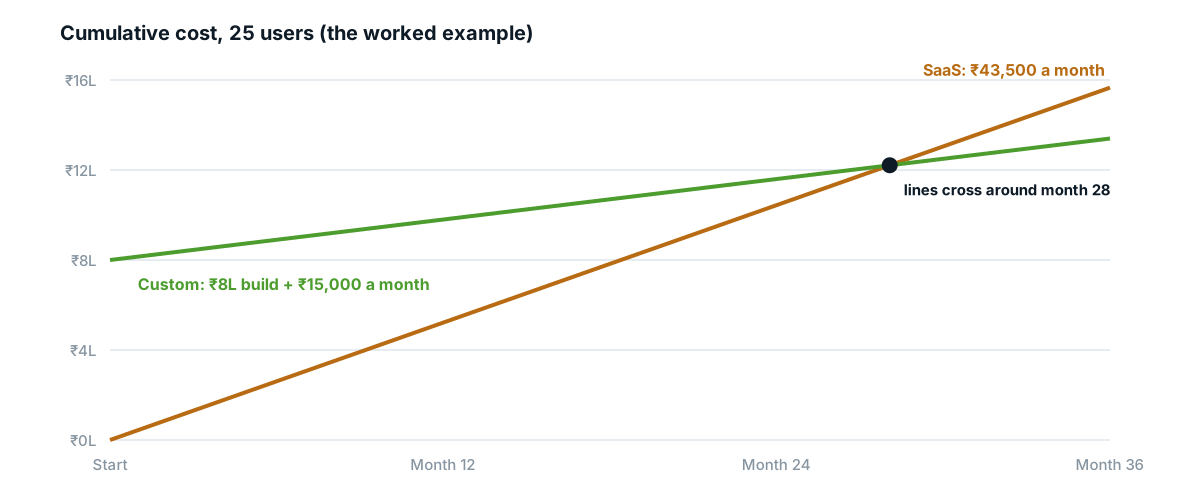 The worked example below, drawn out. With fewer users the SaaS line is flatter and the crossing comes much later.
Signs you have outgrown the off-the-shelf tool
Any one of these is worth noticing. Three or more usually means custom is worth pricing.
- People keep a spreadsheet next to the tool because the tool cannot do one step.
- The same data is typed into two or three systems by hand every day.
- You pay for a top tier mostly to get one feature.
- Per-user fees are now a large monthly line and your team is still growing.
- The way you work is what sets you apart from competitors, and the tool forces you into the standard way.
- You need a customer-facing feature the tool cannot offer, such as a portal, an app or a specific kind of quote.
- Reports take someone half a day each week to assemble from exports.
When to stay with off-the-shelf
Stay if your process is standard for your industry, you have fewer than about ten people using the system, and the tool's roadmap is moving in your direction. Accounting, payroll, email and basic CRM are rarely worth building yourself. Plenty of good software already exists for them.
The middle path: build around the tool
You rarely have to choose all or nothing. Some of the best-value projects we see keep the off-the-shelf system as the record and build a thin custom layer around it:
- A small internal app that pulls orders from Shopify and stock from Tally into one screen.
- A customer portal on top of your existing CRM.
- An automation or AI agent that does the copying between systems that people currently do by hand.
This keeps the reliability of a mature product and fixes the specific part that slows you down. It also costs a fraction of replacing everything.
A worked comparison
Say a distribution business has 25 staff on a SaaS order system at ₹1,500 per user per month, plus ₹6,000 a month in add-ons. That is ₹43,500 a month, or about ₹5.2 lakh a year. Staff also spend roughly an hour a day between them re-keying orders into accounting.
A custom order system that fits their process and syncs to accounting might cost ₹7 to 9 lakh to build and ₹15,000 a month to host and maintain. In year one custom costs more. By the end of year two it is roughly even, and from year three it is clearly cheaper, before counting the hour a day saved.
Change the numbers and the answer changes. With eight users instead of twenty-five, the subscription stays cheaper for years. That is why it is worth doing this sum with your own figures before talking to anyone.
Questions to settle before you decide
- What exactly does the current tool fail to do, in one sentence each?
- How many hours a week do those gaps cost, and at what hourly cost?
- How many users will you have in two years?
- Could a small custom layer fix the gaps without replacing the tool?
- Who in your team will own the custom software and decide what gets built next?
If the answers point to custom, get a quote broken down by feature and compare it against three years of subscription costs. If they point to off-the-shelf, the money is better spent on training people to use the tool you have.
We are glad to do this comparison with you, and if the answer is to stay with your current tool, we will say so.