Data analytics or data science: which course gets you hired first
The two roles overlap less than the course brochures suggest. What each job does all day, what it asks for, and which one to aim at first.
NectArray team · 19 September 2026 · 4 min read
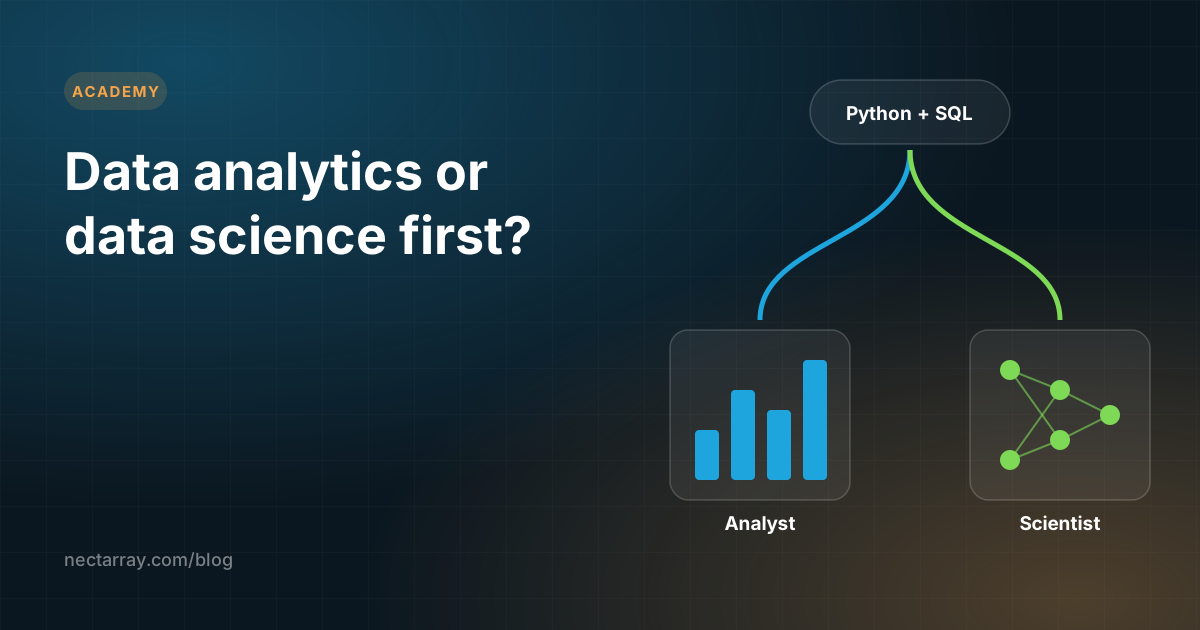
Course brochures tend to blur data analytics and data science into one career. The job titles do overlap at the edges, but the day-to-day work, the interviews and the entry points are different. If you are choosing a course, picking the role first saves months.
What a data analyst does all day
An analyst answers business questions with data that already exists. Why did sales drop in the south last month? Which marketing channel brings customers who stay? What should the target be for next quarter?
The work is mostly SQL to pull and join the data, a spreadsheet or Python to clean and shape it, and a dashboard or a short written summary to explain it to people who will act on it. Tools you will see in job posts: SQL, Excel, Power BI or Tableau, and increasingly Python with pandas.
The hardest part of the job is often the last step: explaining a finding clearly to a manager who has five minutes.
What a data scientist does all day
A data scientist builds models that predict or decide something. Which customers are likely to cancel? What price should this listing have? Is this transaction fraud? More and more, the role also covers building features on top of language models: retrieval over company documents, classification, and agents that call internal tools.
The work uses the same SQL and Python, plus statistics, machine learning libraries such as scikit-learn, experiment design, and enough engineering to get a model running somewhere useful.
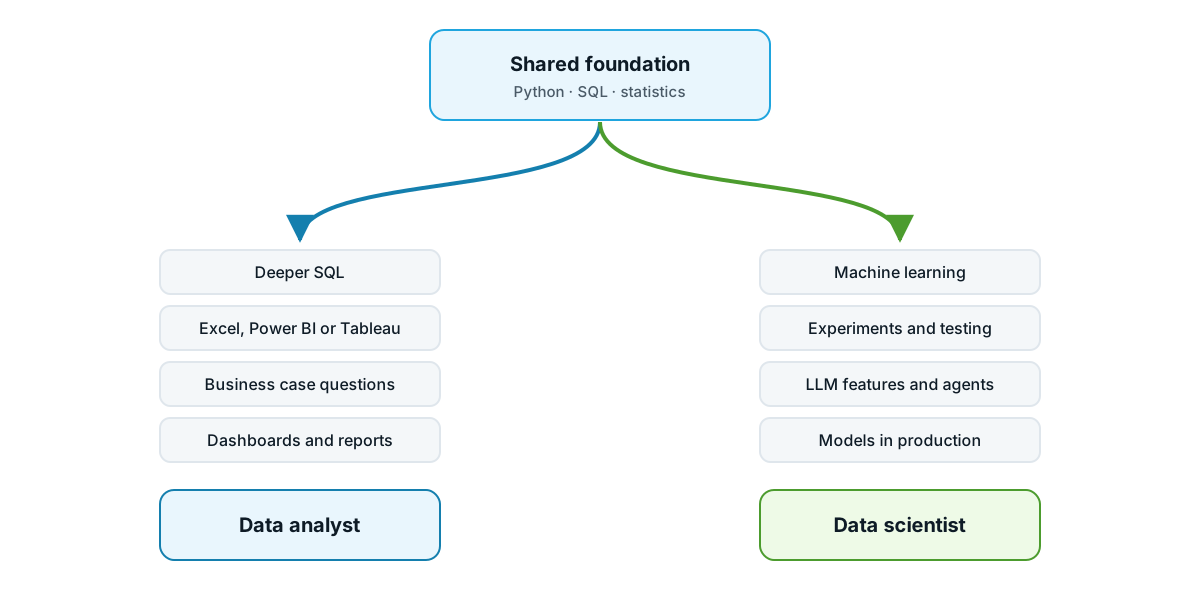 The foundation is shared. The paths split after Python, SQL and basic statistics.
Side by side
| Data analyst | Data scientist | |
|---|---|---|
| Main question | What happened, and why? | What will happen, and what should we do? |
| Core tools | SQL, Excel, Power BI or Tableau, Python | Python, SQL, statistics, ML libraries, LLM APIs |
| Typical output | Dashboards, reports, recommendations | Models, predictions, AI features |
| Maths needed | Descriptive statistics | Probability, statistics, some linear algebra |
| Entry-level openings | More of them | Fewer, and more often asking for experience |
| Interview focus | SQL tests, case questions, a dashboard task | Python and SQL tests, ML concepts, a project deep dive |
Which to aim at first
For most people switching careers, or starting after a non-computer-science degree, an analyst role is the faster route into a data job. There are more openings, the interviews test skills you can build in a few months, and the SQL you learn is the same SQL a data scientist uses every day. Many data scientists started as analysts and moved across after a year or two.
Aim straight at data science if you already code comfortably, have a background in maths, statistics or engineering, or have built projects with models that you can explain in depth. Also consider it if the roles you want are specifically in AI product teams, where Python and language model work are the entry ticket.
What a good course covers either way
Whichever role you pick, the first two-thirds of a good course looks similar:
- Python properly: data structures, functions, files, errors and pandas, with lots of practice problems.
- SQL properly: joins, grouping, window functions and subqueries, practised against a real database until they feel routine.
- Statistics you will actually use: distributions, sampling, and testing whether a difference is real.
- Two or three projects with messy, real data that you can talk through in an interview.
- Interview preparation: timed SQL and Python problems, a résumé that passes automated screening, and mock interviews.
After that, an analytics course adds dashboards and business case practice, and a data science course adds machine learning and, now, work with language models and agents.
Questions to ask a course before joining
- How many hours of the course are SQL practice? For an analyst role, this should be a large block.
- Are projects built on real datasets, and will anyone review your code?
- Does the placement support include SQL and Python tests like the ones companies actually give?
- Can you see the job titles past students were hired into? That tells you which role the course really prepares for.
Our own programme covers Python, then SQL, then data science and agentic AI, then placement preparation, over 12 weeks. It is built so the first two modules serve either path, and the later ones prepare you for whichever interviews you are sitting.