Data science course with placement: how to check the promise
Placement guarantees are the most searched and least explained part of data science courses. What the terms usually mean and the eight things to check before you pay.
NectArray team · 20 September 2026 · 4 min read
"Data science course with placement guarantee" is one of the most searched phrases in Indian education, and one of the least explained. Every institute seems to offer one. Very few say plainly what the guarantee covers, what you have to do to qualify, and what happens if you do not get a job.
We run a placement programme ourselves, so we have a stake in this. The checks below are the ones we would want a friend to run on any course, including ours, before paying.
What "placement" usually means
The word covers a wide range of promises. From weakest to strongest, courses tend to offer:
- Placement assistance: résumé review, mock interviews and a job board.
- Interview referrals: the institute forwards your profile to companies it works with.
- A guaranteed number of interviews, for example five, provided you meet conditions.
- A job guarantee, where you get a refund, in part or in full, if you are not placed within a set time.
All four can be useful. The problem is when a course advertised with the fourth delivers the first.
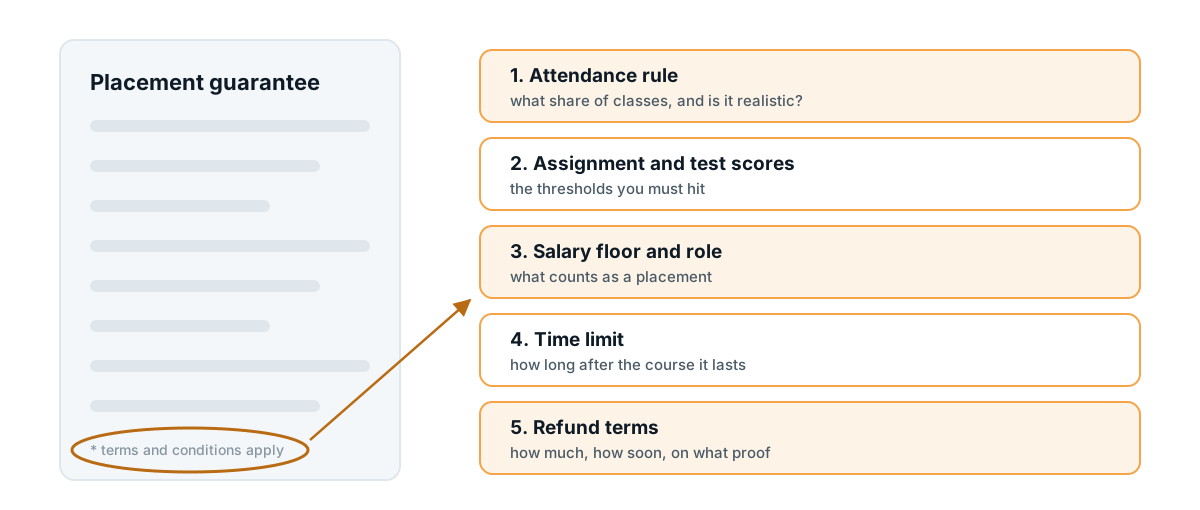 The five clauses that decide what a placement guarantee is worth.
Eight things to check before you pay
1. Get the guarantee in writing
Ask for the exact terms as a document, before payment. A promise made on a sales call that does not appear in the agreement does not exist.
2. Read the eligibility conditions
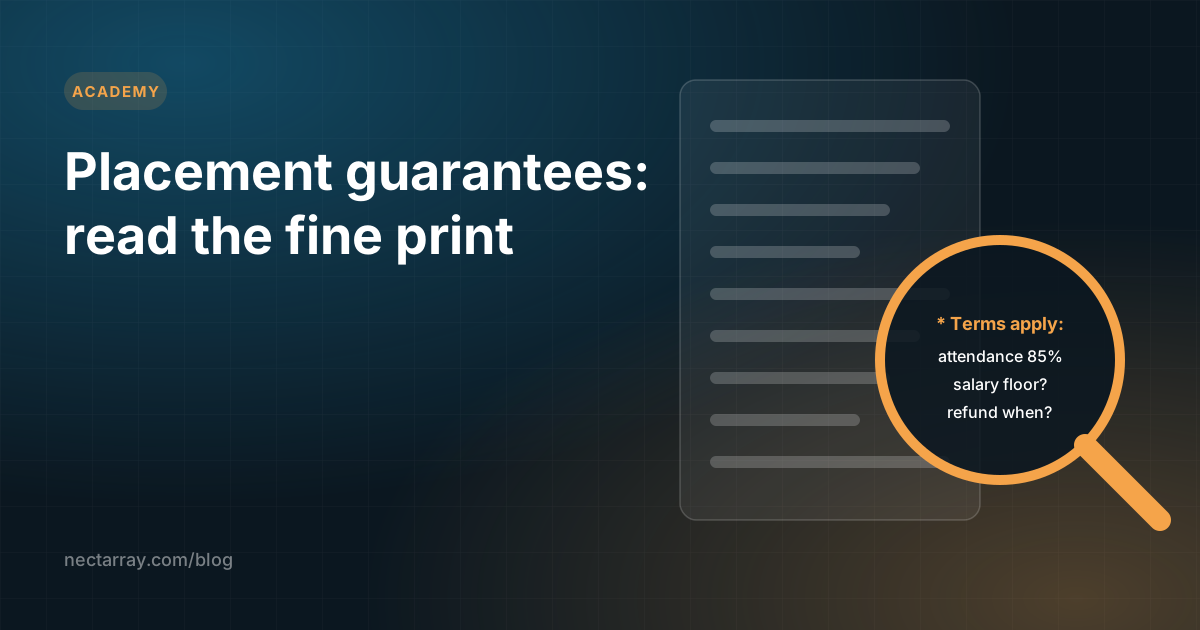
Most guarantees apply only if you meet attendance, assignment and test thresholds, and apply to every job the institute shares. Check the numbers. An 85 percent attendance rule is reasonable. A rule that you must accept the first offer at any salary is not.
3. Check the salary floor and the time limit
"Placement" could mean a ₹2.4 lakh-a-year internship in a city you cannot move to. Look for a stated minimum salary, the kind of role that counts, and how long the guarantee lasts after the course ends.
4. Understand the refund
If there is a refund, what share, how soon, and on what proof? Some refunds are paid only after you show you applied to a large number of jobs. That is fair if the number is realistic.
5. Ask for placement data you can verify
Ask how many people started the last batch, how many finished, and how many were placed, in what roles and at what salaries. Percentages without the base numbers tell you very little. Ask to speak to two or three past students, chosen by you from a list.
6. Look at who teaches
Find out whether the instructors do this work for a living now, how many students each one handles, and whether your code is actually reviewed. Recorded lectures with a doubt forum are a very different product from live classes where someone reads your work.
7. See the curriculum and the projects
A course that gets people hired spends most of its time on Python, SQL and statistics done properly, and on projects with real data. Be cautious with a syllabus that lists twenty tools in twelve weeks. Nobody learns twenty tools in twelve weeks.
8. Check the interview preparation
Placement depends as much on résumé, portfolio and interview practice as on skill. Look for scheduled mock interviews with written feedback, help with your GitHub and LinkedIn, and practice for the HR round.
Red flags
- Pressure to pay today for a "last seat" discount.
- Placement numbers with no batch size or salary data.
- Guarantees only explained verbally.
- A loan arranged on the spot, before you have read the terms.
- No way to speak to past students without the institute choosing them.
What we offer, plainly
Our Python, SQL and Data Science programme runs for 12 weeks, live online, in small groups of five. Assignments are scored out of ten with the specific lines that cost you marks, and you can resubmit once. The placement part is built into the course: résumé and ATS checks, a GitHub portfolio, outreach, HR round practice, and a technical mock interview with written feedback.
We describe that as placement preparation because that is what it is. We would rather you know exactly what you are getting than find the limits of a guarantee after you have paid.
If you are comparing courses, use the eight checks above on all of them, including ours, and ask us anything you would ask anyone else.