Digital marketing for a small business: where the first budget goes
A plain plan for spending a small monthly budget: Google Business Profile, search, one social channel and paid ads, in the order they usually pay back.
NectArray team · 17 September 2026 · 4 min read
A small business owner with ₹30,000 a month for marketing gets advice from every direction. Post on Instagram every day, start a YouTube channel, run Google Ads, hire an SEO agency, try influencers. All of it can work. Doing all of it at once with a small budget means none of it gets enough money or attention to show whether it works.
This is the order we would spend a small budget in, for a local or regional business, and the reasoning behind it.
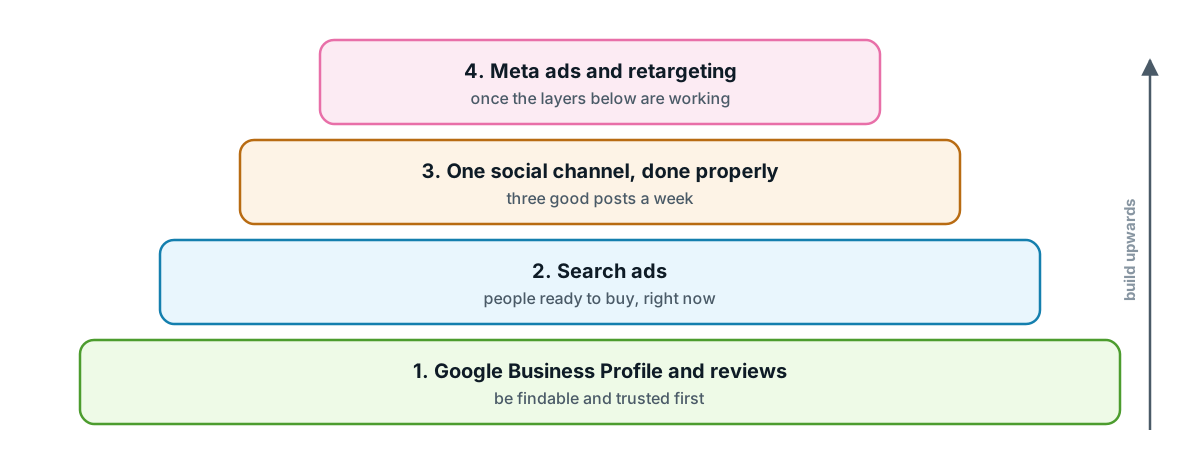 Build from the bottom. Each layer works better once the one below it is in place.
Step 1: be findable where people already look
Before spending anything on ads, make sure people who are already searching for you can find you and trust what they see.
Your Google Business Profile is the most important free marketing asset a local business has. Fill in every field, pick the right categories, add real photos, keep the hours accurate and post an update every week or two. Ask every happy customer for a review, and reply to all reviews, including the bad ones.
Check what comes up when someone searches your business name and your category plus your area, such as "bakery in Indiranagar". Increasingly, people also ask ChatGPT, Gemini or Perplexity to recommend a business. Those assistants draw heavily on your Business Profile, reviews and what other sites say about you, so consistent information everywhere helps you there too.
This step costs time more than money, and it makes every rupee you spend later work harder.
Step 2: capture people who are ready to buy
Search ads put you in front of people at the moment they are looking for what you sell. Someone searching "AC repair near me" wants an AC repaired today. That is why search usually pays back before anything else.
Start small and narrow:
- Target a tight area around your business, or the areas you deliver to.
- Use a short list of specific search terms that signal buying intent.
- Send the clicks to a page that matches the ad and makes it easy to call, WhatsApp or book.
- Track calls and form submissions as conversions from day one, so you know the cost per lead.
A small budget spread over twenty broad keywords teaches you nothing. The same budget on five precise ones shows within a few weeks what a lead costs.
Step 3: one social channel, done properly
Pick the one platform where your customers spend time. For restaurants, salons, fashion and home decor, that is usually Instagram. For B2B services, it is often LinkedIn. Post consistently, mostly short videos and useful posts that show your work, your people and your customers.
One channel with three good posts a week does more than four channels with one tired post each.
Step 4: retarget and grow
Once search ads and your social channel are producing results, add Meta ads to reach people similar to your customers, and retargeting ads to people who visited your site or engaged with your posts but did not buy. These work much better once you have content that has already proved it performs organically.
A sample split for ₹30,000 a month
| Where | Share | Roughly | What it pays for |
|---|---|---|---|
| Google search ads | 45% | ₹13,500 | Clicks from people searching for what you sell |
| Content for one social channel | 25% | ₹7,500 | Short videos and posts, made well |
| Meta ads and retargeting | 20% | ₹6,000 | Reaching lookalike audiences and past visitors |
| Reviews, profile and tracking tools | 10% | ₹3,000 | Review requests, call tracking, small tools |
Treat this as a starting point. After two months, move money towards whatever brings leads at the lowest cost, and away from whatever does not.
What to measure every month
Keep it to a few numbers you can act on:
- Leads, meaning calls, WhatsApp messages, forms and bookings, by source.
- Cost per lead for each paid channel.
- How many leads became customers, and what they were worth.
- Reviews gained and your average rating.
Likes and followers are nice to see. They do not pay the rent, so they should never be the headline in a monthly report.
Doing it yourself or hiring an agency
You can do steps 1 and 3 yourself if someone on your team has a few hours a week and some interest. Search ads can waste money quickly if they are set up badly, so that is often the first part worth handing to a specialist.
If you hire an agency, ask them to report the numbers above every month and to explain what they will change next month and why. We work this way with our own clients: we start by checking where you are found today, then spend in the order above, and report on leads and revenue rather than reach.